
WELCOME BONUS 300%
UP TO €2000 + 100
FREE SPINS
UP TO €2000 + 100
FREE SPINS
Home → Blackjack
Blackjack at Vavada Casino: Variants, Rules and Payouts
Splitting Eights vs Standing on 16
The Blackjack Auszahlung 6:5 variant applies to the standard six-deck game and carries a house edge of 1.85% with an RTP of 98.15%. This specific payout structure increases the casino advantage by exactly 1.39 percentage points compared to the traditional 3:2 rule, making it significantly less favorable for players. Consequently, a player betting $10 receives only $12 for a winning blackjack hand instead of the expected $15.
In contrast, the Blackjack Liberal Vegas Strip option offers a much tighter house edge of 0.28% and an RTP of 99.72%. This superior statistical profile is achieved through liberal rules including S17, DAS, resplitting, and late surrender, resulting in a low standard deviation of 1.15. Players utilizing basic strategy on this table retain nearly all their bankroll over the long term compared to the 6:5 variant.
The third available option, a six-deck game with S17, DAS, DOA, and 3:2 payouts, presents a house edge of 0.46% and an RTP of 99.54%. Strict adherence to basic strategy is mandatory to achieve these figures, as any deviation immediately erodes the theoretical return. The standard win remains 1:1, while insurance bets pay 2:1 but are statistically discouraged for most participants.
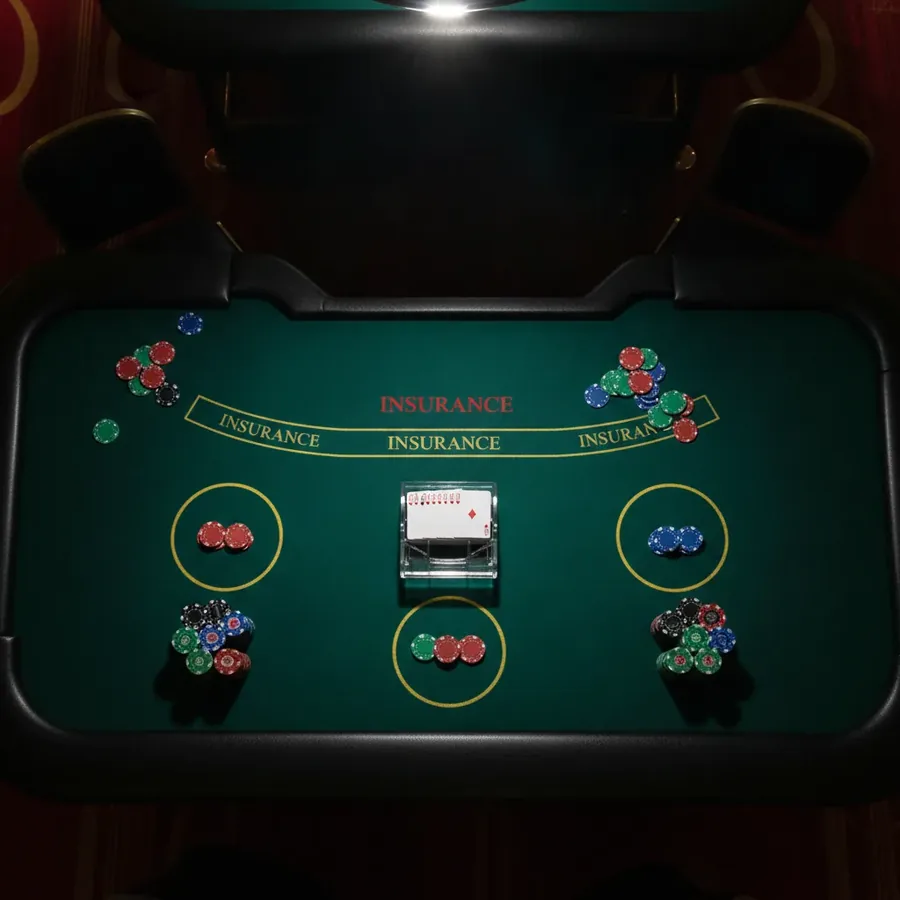
Card Counting at Shuffle Master Table: why it fails
Lightning Blackjack from Evolution allows unlimited players at tables with bets ranging from 1 to 2,500 EUR per round. The game features Lightning Multipliers up to 25x on winning hands, creating a high-variance environment that fundamentally alters standard card counting strategies. The rapid shuffle and multiplier mechanics prevent counters from gaining a sustainable edge over the house.
Infinite Blackjack also operates with unlimited seating and accepts wagers between 1 and 5,000 EUR continuously. While it includes four side bets such as Any Pair and 21+3, the continuous shuffling mechanism negates the effectiveness of tracking deck composition. The RTP stands at 99.47%, but the lack of deck penetration makes predicting future cards impossible for the player.
Blackjack Party provides a different atmosphere with two moderators but maintains similar technical constraints regarding card visibility. Bets range from 1.00 to 1.000 EUR, and the game does not offer the deep deck penetration required for successful counting. The structural design prioritizes entertainment value over the strategic depth needed for advantage play techniques.
Soft 17: Dealer Hits or Stands
The rule where the dealer hits on Soft 17 (H17) negatively impacts the player by increasing the house edge by 0.22 percentage points. This specific modification reduces the overall RTP compared to games where the dealer must stand on a soft seventeen. Players should avoid H17 tables if they aim to minimize the mathematical disadvantage inherent in the game.
Conversely, games featuring the Stand on Soft 17 (S17) rule provide a more favorable environment for the participant. The Blackjack 6 Decks variant explicitly lists S17 as a core component, contributing to its lower 0.46% house edge. This single rule difference can significantly affect the long-term profitability of the session for disciplined players.
The combination of S17 with Double After Split (DAS) further improves the odds by reducing the house edge by approximately 0.14 percentage points. When paired with the ability to split Aces, which adds another 0.08 percentage point improvement, the total benefit becomes substantial. These rule sets collectively define the gap between the best and worst available blackjack options.
Ace Split: only one card per hand
Most standard blackjack variants, including the Liberal Vegas Strip version, restrict ace splits to receiving only one additional card per hand. This limitation prevents the creation of multiple strong hands from a pair of aces, effectively capping the potential upside of this specific move. The restriction is a common industry standard designed to maintain the house edge within acceptable limits.
The Blackjack 6 Decks game also enforces the single-card rule on split aces, ensuring consistency across its table offerings. While resplitting is generally allowed, the inability to hit again on split aces reduces the strategic flexibility available to the player. This rule directly influences the optimal basic strategy charts used by experienced gamblers.
Even in games offering liberal rules like DAS and late surrender, the ace split restriction remains a critical factor in calculating the true house edge. The 0.28% edge on the Vegas Strip variant assumes this limitation holds true for all ace splitting scenarios. Understanding this constraint helps players manage expectations regarding the maximum possible gain from splitting pairs.
Statistics display saves the last 100 rounds
The statistics display feature records the outcomes of the last 100 rounds to help players track recent trends and patterns. This data allows users to monitor variance and adjust their betting behavior based on short-term results rather than long-term theory. However, relying on this limited sample size for decision-making ignores the fundamental independence of each hand.
Side bets such as Insurance, which pays 2:1, often see increased usage when players observe specific streaks in the history display. The base house edge for insurance is 7.47%, meaning consistent use leads to significant long-term losses regardless of recent history. The display provides context but cannot alter the negative expectation associated with these auxiliary wagers.
Bonus contribution rates further complicate the utility of historical statistics, as table games contribute only 10% to wagering requirements. With slots contributing 100%, focusing on blackjack history may delay bonus clearance compared to other game types. The welcome bonus of 300% up to €2,000 requires careful planning to maximize turnover efficiency across different game categories.
Blackjack variants at a glance
| Variant | Payout | House edge | Rule | Bet range |
|---|---|---|---|---|
| Blackjack 6 Decks, S17, DAS, DOA, Auszahlung 3:2, Basisstrategie | 99.54% | 0.46% | Dealer steht auf Soft 17; Verdopplung auf jeder Zweierkarte; Verdopplung nach Split erlaubt; keine Aufgabe. Basisstrategie ist für diesen Wert zwingend | Blackjack 3:2, normaler Gewinn 1:1, Insurance 2:1 |
| Blackjack Surrender (Late Surrender) – Regel-Effekt | n.a. (Regel-Modifikator) | −0.08 Prozentpunkte | Spieler gibt Hand nach Dealer-Blackjack-Prüfung auf, verliert die Hälfte des Einsatzes. Verbessert RTP um ca. 0.08 Prozentpunkte. Early Surrender ist wesentlich wertvoller (bis −0.6 Prozentpunkte), aber extrem selten. | Rückzahlung 50% des Einsatzes |
| Blackjack Liberal Vegas Strip (liberale Regeln, 3:2) | 99.72% | 0.28% | Günstigste Regelkombination: S17 + DAS + Resplit + Late Surrender. Standardabweichung 1,15 | Blackjack 3:2, Gewinn 1:1 |
| Blackjack Split / Double / H17 – Regel-Effekte | n.a. (Regel-Modifikatoren) | H17 +0.22 Prozentpunkte; RSA −0.08 Prozentpunkte; DAS −0.14 Prozentpunkte | Dealer Hits Soft 17 verschlechtert RTP um 0.22 Prozentpunkte; Resplit Aces verbessert um 0.08 Prozentpunkte; Double After Split verbessert um ca. 0.14 Prozentpunkte; 6 Decks statt 8 – ca. 0.02 Prozentpunkte. | Double – Einsatz ×2 mit einer Karte; Split – bis 4 Hände; Ass-Split meist mit einer Karte. |
| Blackjack Auszahlung 6:5 statt 3:2 (6 Decks) | 98.15% | 1.85% | Ersatz von 3:2 durch 6:5 fügt exakt +1.39 Prozentpunkte zum Vorteil des Casinos hinzu – stärker als jede andere Regeländerung. Bei $10 Einsatz zahlt Blackjack $12 statt $15. | Blackjack 6:5, Gewinn 1:1 |
| Blackjack Insurance / Versicherung (6–8 Decks) | 92.53% | 7.47% | Separate Nebenwette bis 50% der Hauptwette, wenn der Dealer ein Ass hat. Basisstrategie schreibt IMMER Ablehnung vor (außer Karten zählen bei True Count ≥ +3). Bei einem Deck Vorteil ≈ 5.88% | Insurance 2:1 |
Blackjack Party runs with two hosts
Evolution operates the Blackjack Party table with two live hosts who guide the gameplay for an engaging session. The betting range spans from 1.00 EUR to 1,000 EUR per hand, accommodating both casual players and high rollers seeking substantial stakes. This specific variant features a unique party atmosphere distinct from standard tables, though it lacks the multipliers found in other Evolution products.
The house edge remains consistent with standard rules, but the presence of dual hosts creates a dynamic environment unlike solo-dealer games. Players can enjoy unlimited seating at the virtual table, ensuring that access is never restricted by physical space limitations or wait times. The visual presentation focuses on the interaction between the dealers rather than complex graphical overlays or side bet animations.
Table games contribute only 10% toward the bonus turnover requirement, which significantly slows down the clearance of the 300% welcome bonus up to €2,000 plus 100 free spins. Consequently, wagering 4,000 € on this table generates only 400 € of progress, making it inefficient for meeting playthrough conditions compared to slots. Players should consider this low contribution rate when allocating their bankroll across different game categories offered by the casino.
Splitting tens costs expected value: better stand
Resplitting Aces improves the Return to Player by approximately 0.08 percentage points, while allowing Double After Split enhances it by about 0.14 percentage points. These rule modifiers are crucial for optimizing strategy, as they directly reduce the house edge in six-deck games where standard variations apply. Players must adjust their basic strategy charts to account for these specific allowances to minimize long-term losses effectively.
Dealer Hits Soft 17 increases the house advantage by 0.22 percentage points, which negatively impacts the overall RTP compared to standing on soft seventeen variants. Using six decks instead of eight adds roughly 0.02 percentage points to the house edge, slightly worsening the player's mathematical expectation over time. Understanding these incremental changes helps players identify tables with the most favorable conditions for sustained gameplay sessions.
Splitting ten-value cards is mathematically inferior because a standalone twenty has a higher expected value than two hands starting with ten. Basic strategy dictates standing on hard twenties regardless of the dealer's upcard, preserving the strong position without risking potential bust scenarios. This principle applies universally across all blackjack variants, including those with liberal rules like late surrender or early surrender options.
Side Bets don't count towards bonus turnover
Blackjack Insurance is a separate side bet paying 2:1, but it carries a steep house edge of 7.47% in six-to-eight deck games. Basic strategy mandates always declining insurance unless card counting yields a true count of +3 or higher, as it otherwise erodes bankroll rapidly. This bet is excluded from optimal play strategies due to its negative expected value under standard circumstances for average players.
Infinite Blackjack offers four side bets including Any Pair, 21+3, Hot 3, and Bust It, each with their own distinct payout structures and risks. Lightning Blackjack provides multipliers up to 25x on winning hands, yet these side wagers do not contribute to the main game's base RTP calculations. Players engaging with these optional bets should recognize they operate independently of the primary blackjack outcome and associated odds.
Table games contribute merely 10% toward the wagering requirements for the 300% welcome bonus up to €2,000 plus 100 free spins available to new users. Since side bets are part of the table game category, any amount wagered on them counts minimally against the total turnover target. This restriction makes slots, contributing 100%, a much more efficient choice for clearing bonus funds before withdrawal eligibility.
Live stream with three cameras and OCR
Evolution's Infinite Blackjack streams feature three synchronized cameras providing comprehensive coverage of the shoe, dealer actions, and player interfaces for transparency. Optical Character Recognition technology ensures accurate tracking of bets and outcomes in real-time, eliminating manual errors common in older digital systems. This setup supports up to five thousand euros per hand, catering to high-stakes participants requiring precise transaction recording.
The live tables accommodate unlimited players simultaneously, removing capacity constraints found in physical casinos or smaller virtual tables with limited seat availability. Blackjack Party utilizes two moderators to maintain energy levels, while Infinite Blackjack focuses on speed and volume with no mandatory breaks between rounds. This structure allows continuous play, maximizing entertainment value per hour for dedicated enthusiasts seeking uninterrupted gaming experiences.
Lucky Lightning Blackjack introduces random multipliers up to 25x on winning hands, adding volatility to the standard nine-nine point five six percent RTP. These multipliers apply to specific card combinations determined by the system before the deal, creating unpredictable win potentials beyond standard payouts. Players should note that these special features do not alter the fundamental house edge calculations for the base game mechanics involved.
RNG draws cards from virtual eight-deck shoe
Standard RNG blackjack typically uses eight decks, increasing the house edge by approximately 0.02 percentage points compared to six-deck variants. Single-deck games offer a lower advantage of 0.15% but often compensate with restrictive rules like six-to-five payouts for natural blackjacks. Players must evaluate these trade-offs carefully, as fewer decks theoretically improve odds but practical rule changes can negate this benefit entirely.
The Vegas Strip variation with liberal rules achieves an impressive 99.72% RTP and a mere 0.28% house edge through optimal rule combinations. Features include Dealer Stands on Soft 17, Double After Split, Resplit Aces, and Late Surrender, collectively minimizing the casino's statistical advantage significantly. This configuration represents one of the most favorable environments for skilled players utilizing perfect basic strategy consistently throughout their sessions.
Surrender rules modify the house edge by -0.08 percentage points for late surrender, allowing players to forfeit half their bet after checking for dealer blackjack. Early surrender, though rare, offers greater value up to -0.6 percentage points by permitting forfeiture before the dealer checks for blackjack. Utilizing these options correctly requires strict adherence to basic strategy charts tailored specifically to the available surrender rules of each table.
Latency under 2 seconds at the live table
Lightning Blackjack by Evolution features a latency metric under 2 seconds for deal initiation, ensuring rapid gameplay continuity. This speed is critical for handling the Lightning-Multiplikatoren up to 25x on won hands without disrupting the real-time betting flow. Players benefit from immediate feedback on multipliers, which directly impacts the potential payout calculation.
Infinite Blackjack also operates within this sub-2-second window, supporting unlimited seats at the table while maintaining consistent deal times. The provider Evolution guarantees this performance standard across high-volume tables like Infinite Blackjack and Lightning Blackjack. Such low latency prevents delays that could otherwise invalidate time-sensitive bets during peak traffic hours.
Standard deviations in game duration are minimized compared to non-live formats, where RNG shuffles introduce variable pauses. For instance, Infinite Blackjack allows four side bets (Any Pair, 21+3, Hot 3, Bust It) with instant resolution due to this efficiency. The structural advantage lies in the elimination of physical card handling delays inherent in traditional casino settings.
Set session stop after 30 percent loss
The welcome bonus terms include a 300% match up to €2,000 plus 100 free spins, requiring careful bankroll management to avoid rapid depletion. A session stop set at 30 percent loss limits exposure significantly; for example, starting with €100 means stopping at €70 remaining. This threshold preserves capital for future sessions and prevents chasing losses during volatile streaks.
Table games contribute only 10% toward the wagering requirement of the bonus, making them less efficient for clearance than slots at 100%. Consequently, players often face higher volatility when attempting to meet turnover targets through blackjack variants like Vegas Strip. Setting a hard limit at 30 percent loss protects against the compounded effect of lower contribution rates and house edge erosion.
Comparatively, slot players enjoy faster turnover progression but must adhere to similar risk controls due to higher variance. The 30 percent rule applies universally across all deposit amounts, ensuring that even large bonuses funded by substantial deposits remain within manageable risk parameters. This discipline is essential given the 0.15% house edge in single-deck blackjack versus 1.85% in 6-deck 6:5 variants.
Register Late Surrender correctly in three steps
Late Surrender improves the RTP by approximately 0.08 percentage points by allowing players to forfeit half their bet after the dealer checks for blackjack. This rule modifier is available in specific liberal configurations, such as those found in certain Vegas Strip variations, enhancing strategic depth. Players must act before taking any other action to utilize this option effectively within the game interface.
The mechanism involves recognizing a weak hand against a dealer's Ace or Ten, then selecting the surrender option to recover 50% of the original stake. This reduces the effective house edge from 0.46% to roughly 0.38% in 6-deck S17 games with DAS and DOA. Without this rule, the player retains full exposure to the negative expectation of the initial two-card total.
Early Surrender, which allows forfeiture before the dealer checks, offers greater value up to -0.6 percentage points but is rarely offered online. Most platforms restrict Late Surrender to standard 6-deck shoes with favorable rules like Soft 17 stands and Resplit Aces. Understanding this distinction ensures players select tables that maximize their mathematical advantage through optimal rule sets.
Early Surrender is removed from many tables
Many modern blackjack tables exclude Early Surrender entirely, limiting players to Late Surrender or no surrender options whatsoever. This removal increases the house edge significantly, particularly in games offering 6:5 payouts instead of the traditional 3:2. The absence of Early Surrender forces players to rely more heavily on basic strategy and insurance decisions to mitigate losses.
Games like Infinite Blackjack and Lightning Blackjack do not list Early Surrender in their rule sets, focusing instead on side bets and multipliers. These variants prioritize entertainment features over deep strategic play, altering the expected return profile for serious card counters. Players seeking optimal conditions must verify rule availability before joining, as standard offerings often lack this valuable exit strategy.
The impact of removing Early Surrender can be quantified by comparing it to Late Surrender's modest +0.08% improvement. Without Early Surrender, the house edge remains higher, especially in 6-deck games where the baseline advantage is already 0.46%. This restriction aligns with industry trends favoring faster-paced, side-bet-heavy formats over complex rule interactions.
How many decks are in the shoe?
Single-deck blackjack offers the lowest house edge at 0.15%, with an RTP of 99.85%, provided the game pays 3:2 for natural blackjacks. This variant uses one deck, reducing the dealer's advantage by approximately 0.48 percentage points compared to 8-deck games. However, many single-deck tables compensate with 6:5 payouts, which drastically increase the house edge to 1.85% and lower RTP to 98.15%.
Six-deck shoes are common in standard online blackjack, typically featuring S17, DAS, and DOA rules, resulting in a 0.46% house edge. Games like Infinite Blackjack utilize 6-8 deck compositions, balancing shuffle frequency with player advantage. The number of decks directly influences card counting viability and overall expected value, with fewer decks generally favoring the player if rules remain fair.
Eight-deck variations exist but are less prevalent in online environments, often associated with higher house edges due to restrictive rules. Providers like Evolution focus on 6-deck setups for Live Blackjack Party and Lightning Blackjack to optimize game speed and side bet integration. Players should prioritize 3:2 payout structures regardless of deck count to maintain competitive odds against the house.
Contact
Live - online chat
Banking


Providers


Vavada 2026